Home Septic tanks Septic tank replacement case study
A broken septic tank cannot be patched. We took out the old one at an isolated house and fitted a new 2,000-litre tank with a biological filter. The treated water ends up in a bio-garden that waters the trees in the orchard. This is the job, day by day, with our own photos.
In short
- Property: isolated house, one bathroom and a kitchen, one or two people.
- Old tank: plastic, small and broken.
- New tank: 2,000-litre polyethylene, with a biological filter, no electricity needed, certified to the European standard EN 12566-1.
- Treated water: goes to a limestone gravel bio-garden that waters the nearby trees.
- Time: three days with a mini-excavator.
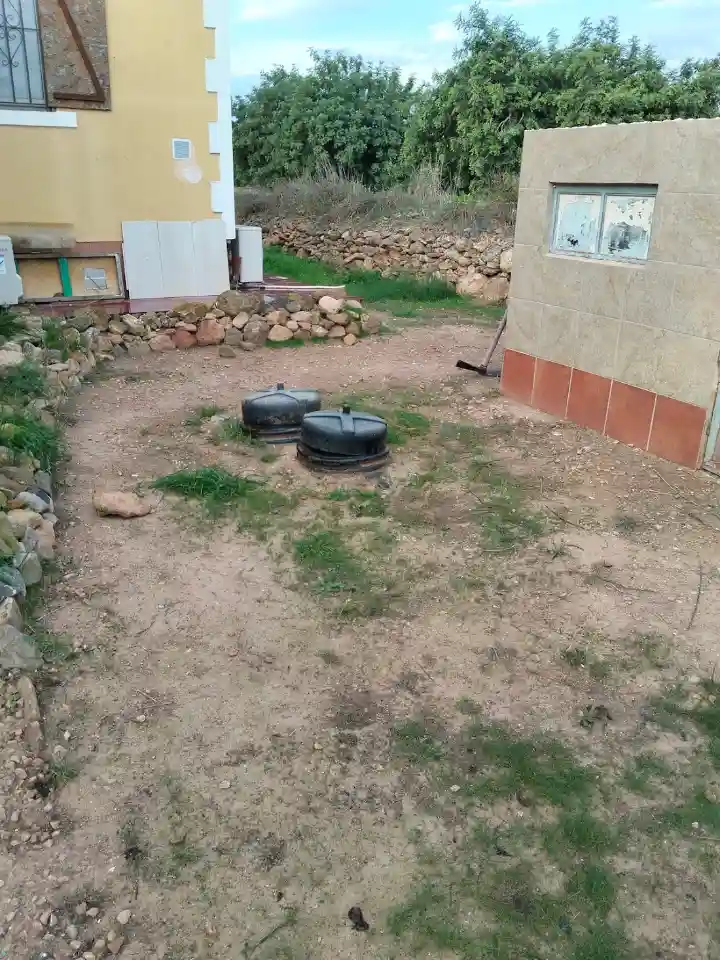
Where we started: a broken tank
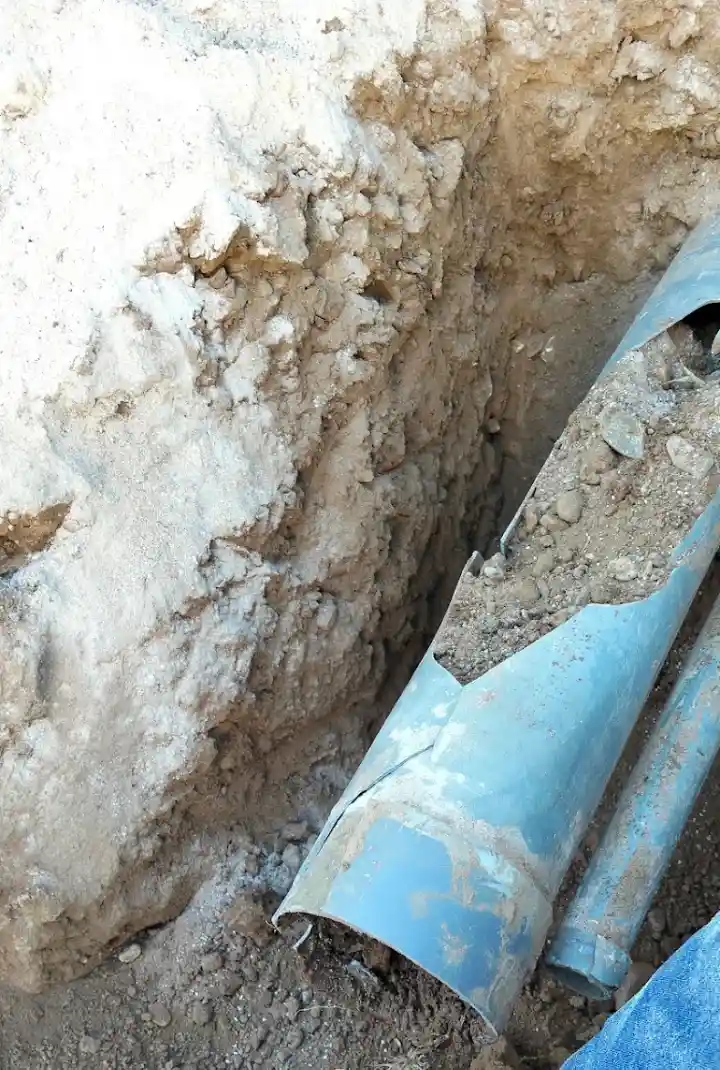
The old tank was a small plastic container buried near the house, and it was broken. A tank in that state stops separating the solids properly, can leak into the ground and ends up causing smells and blockages. When it is broken you do not patch it or keep using it: you take it out whole and put in another.
Why a 2,000-litre tank with a biological filter
A septic tank separates the solids from the water. The biological filter refines that water before it leaves towards the ground. For a house with one or two people, 2,000 litres gives plenty of room: more settling time and fewer emptyings than with a tank that is only just big enough.
The one we fitted is high-density polyethylene with ribbing, weighs around 100 kg empty, needs no electricity and is certified to EN 12566-1, which tests watertightness, structural strength and durability.
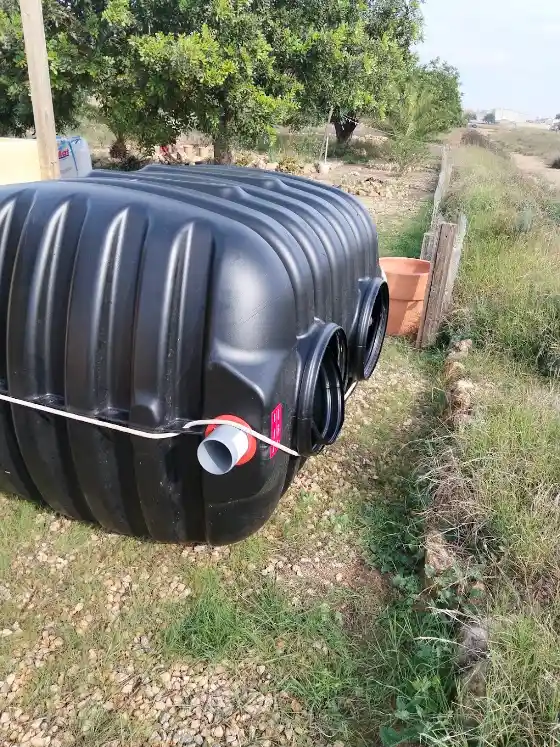
Day 1: setting out, digging and removing the old tank
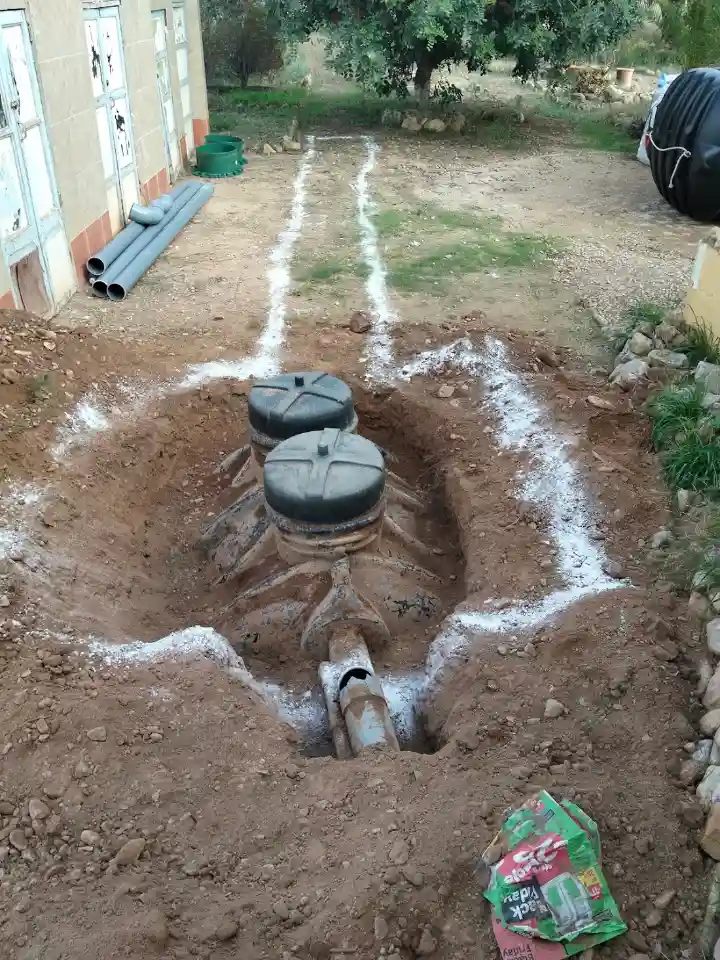
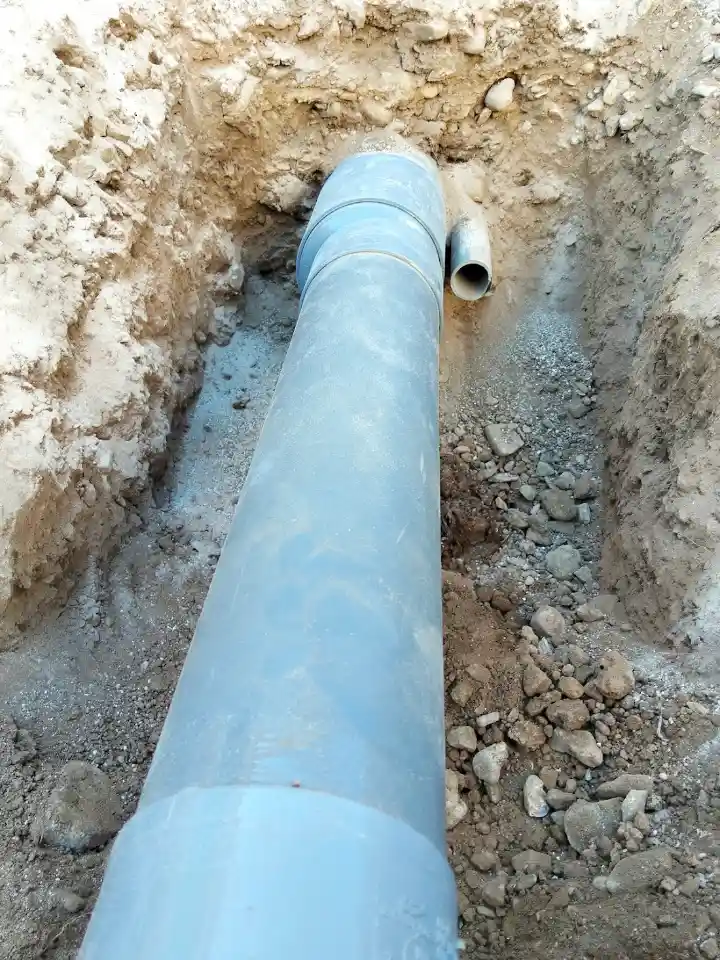
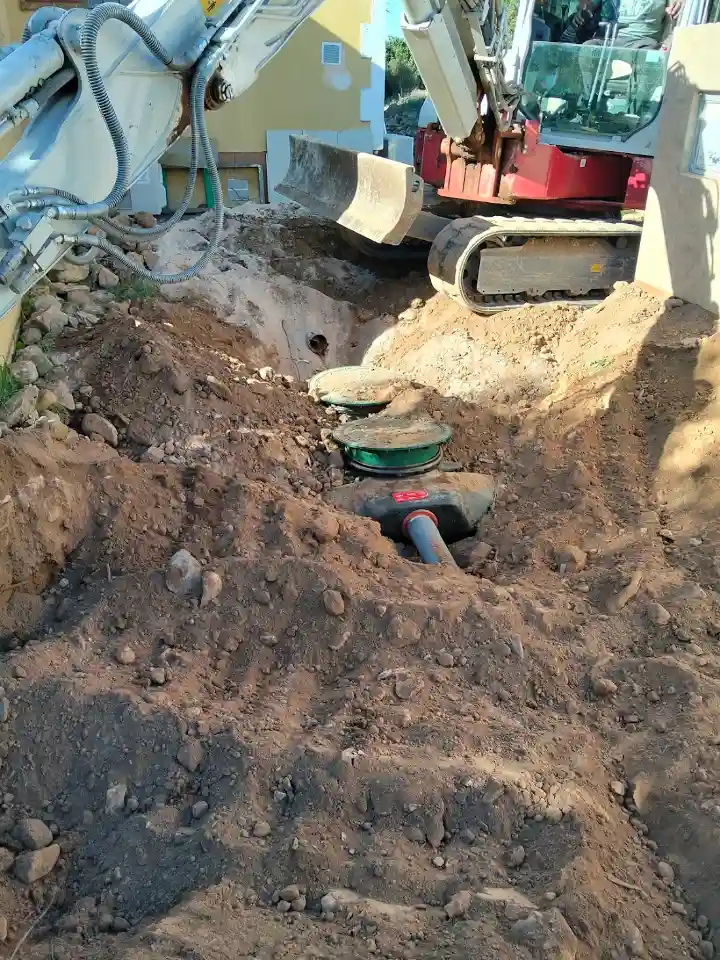
We marked the route of the pipes and the position of the new tank on the ground with chalk. Then the mini-excavator opened the hole and we took out the old tank. Before moving any earth you need to know where every pipe runs: the fall of the pipes depends on that setting-out.
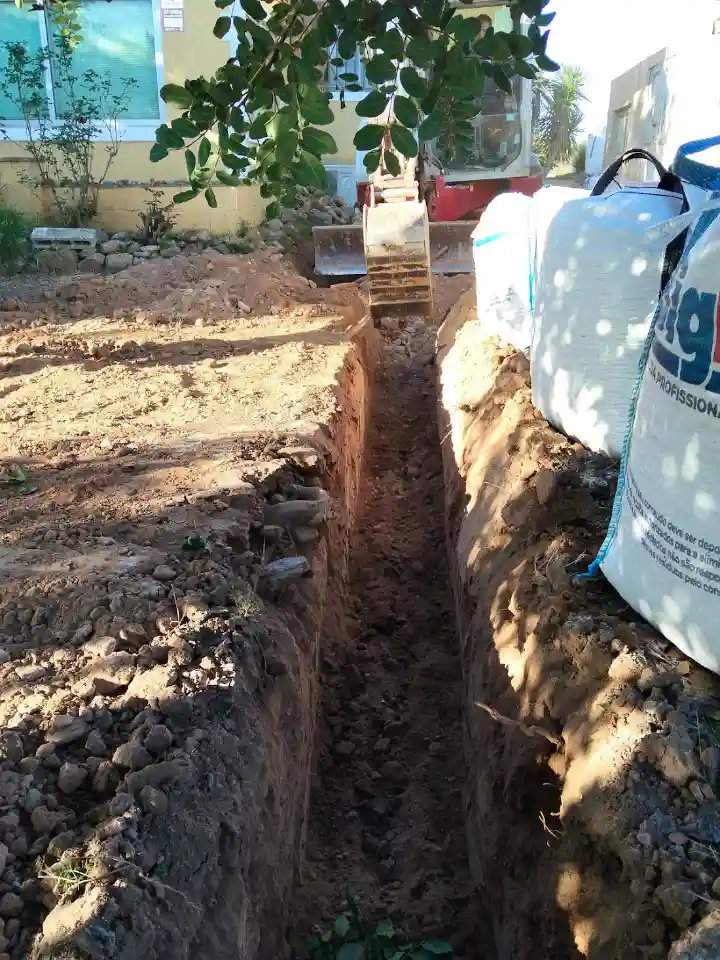
Day 2: trench, pipes and fitting the new tank
We opened the trench, prepared the gravel bed and lowered the tank in with the machine. We connected the PVC drainage pipes and, before covering anything, checked that the tank was level and that the inlet and outlet had a fall.
Day 3: backfill, lids and finishing
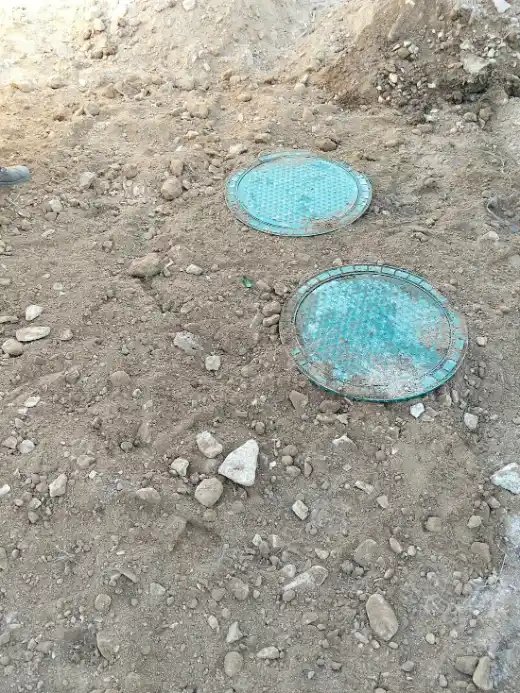
We backfilled and compacted with gravel, as the manufacturer specifies: with soil, the weight ends up deforming the tank. The access lids sit flush with the ground, easy to reach for emptying, and the site is left clean.
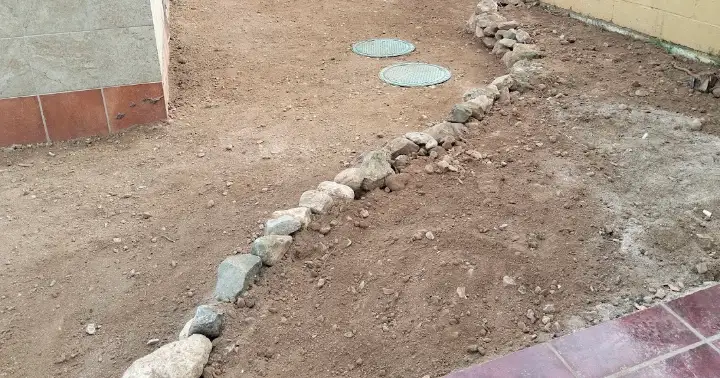
The bio-garden: where the treated water ends up
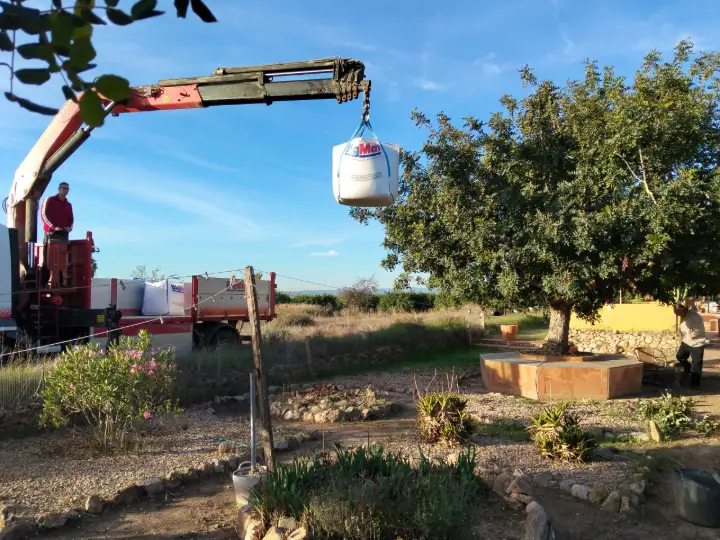
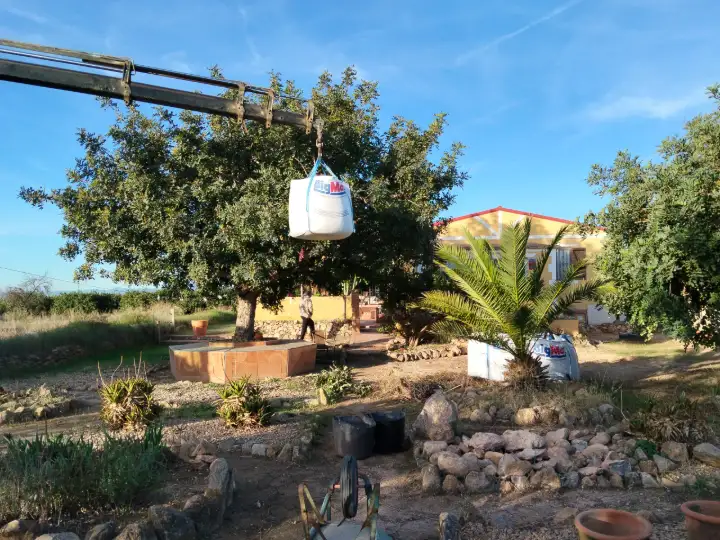
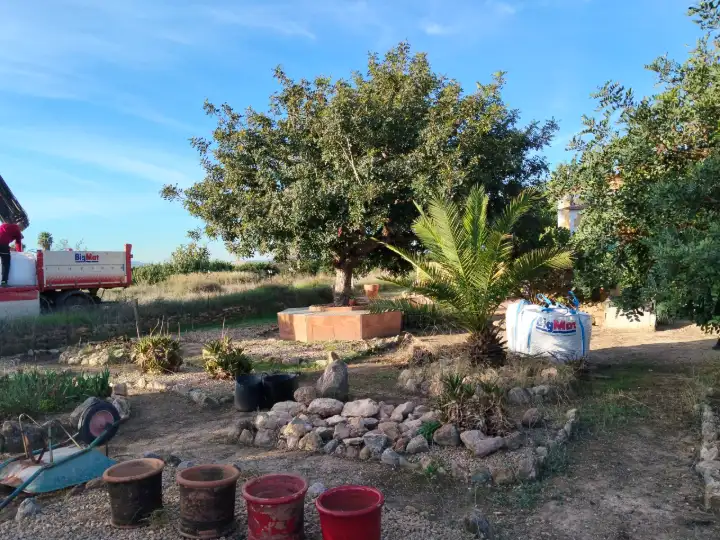
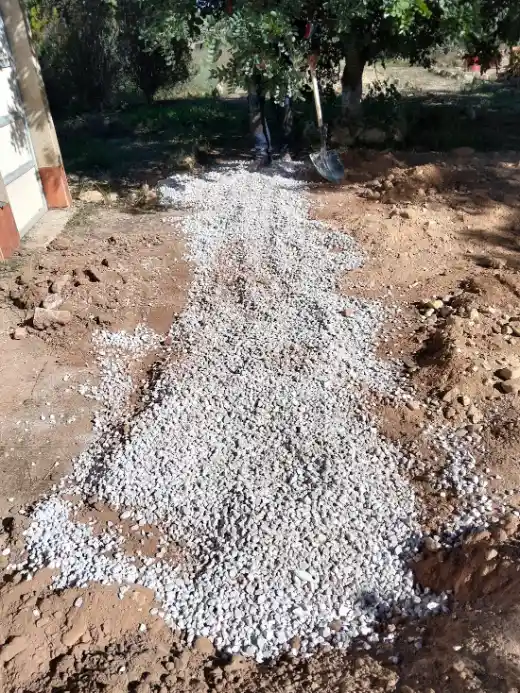
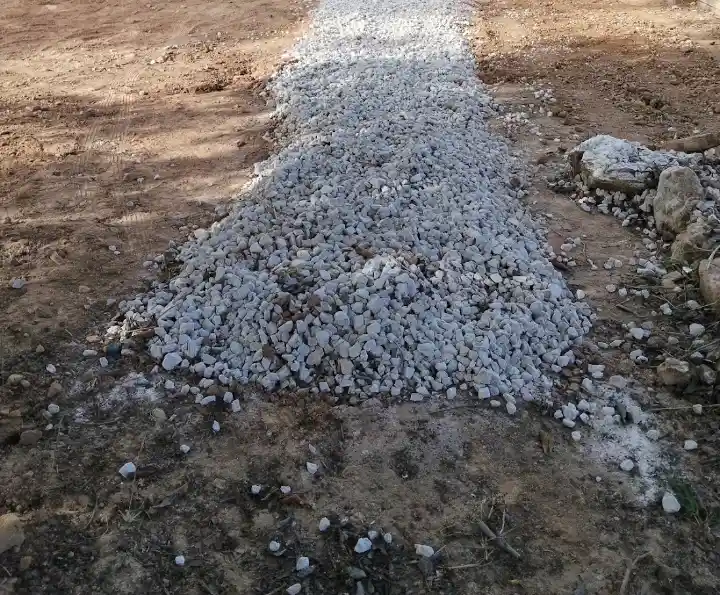
After the filter, the treated water is not sent to just any ditch. It goes to a bio-garden: a bed of limestone gravel where it soaks in and spreads through the orchard, watering the nearby trees without anyone having to do anything. The gravel arrived in bulk bags and we unloaded it with a crane lorry.
What makes a septic tank replacement well done
A tank is buried and never seen again, so what counts is what is done before it is covered:
- Setting-out before digging: pipes and tank marked on the ground.
- Tank level on a gravel bed, with no hard spots to deform it.
- Fall checked on the inlet and the outlet.
- Backfill with gravel only, as the manufacturer asks.
- Lids flush with the ground, accessible for emptying and checking.
- Where the water goes decided before starting: here, a bio-garden.
- A clean site at the end.
What to know before replacing your septic tank
- Emptying: every septic tank has to be emptied from time to time by an authorised contractor, and the filter checked.
- Where the water goes: decide it before starting. Here it ends up in a bio-garden that waters the trees.
- What not to flush: wipes, oils, large amounts of bleach and medicines.
- Access: a 2,000-litre tank is more than 2 metres long; you need to see how the lorry and the machine get in.
Who does it
Ángel has been in the trade since 1996 and self-employed since 2002, with training in drainage and sewer design and in wastewater treatment and management. Almost thirty years in the trade shows in what you cannot see: where each pipe runs, what fall it has and where the water ends up.
What the client says
The garden looks wonderful, I can’t believe it, knowing how it was before. […] We were very lucky to find you.
Diana, client on this job (translated from Spanish)
Is your septic tank smelling, overflowing or broken? Send us a few photos of the site and we will tell you what it would take before we come. We work in Murcia, Alicante and Almería.
Frequently asked questions
How long does it take to replace a septic tank?
Here, three working days with a mini-excavator and with the tank already on site. It depends on access, the state of the pipework and what has to be removed. With a few photos of the site we can give you a realistic timescale.
How much does it cost to replace a septic tank?
There is no fixed price: it depends on the size of the tank, access for the machine, depth, the pipework that has to be renewed, whether the old tank has to be taken out and where the treated water goes. We give a fixed written quote before we start.
Does a septic tank with a biological filter need electricity?
No. This one works without electricity: the solids settle and the water then passes through the biological filter.
What is a bio-garden?
A bed of gravel where the already-treated water ends up. It soaks into the ground and spreads out, and it can water the trees around it.
Does a septic tank need emptying?
Yes. Sludge builds up and has to be removed from time to time by an authorised contractor. The filter also needs checking.
More about our work: septic tanks, plumbing, leak detection, service areas and contact.