Home Services Heating and hot water
Boilers, water heaters, radiators and underfloor heating across the Costa Blanca, Murcia and the Almería Levante. A licensed installer who has been in the trade since 1996 — and you can explain the fault in English.
Why Spanish houses feel cold in winter
Nearly every British and Northern European owner we meet says some version of the same thing: the house is wonderful for ten months of the year and miserable for the other two. It is not your imagination, and it is not that the winter here is harsh — it isn’t. It is that most housing on this coast was built to shed summer heat, not to hold winter warmth.
- Little or no insulation, and tiled floors over an uninsulated slab. The building never stores any warmth, so the moment you switch the heating off it is gone.
- Single glazing or poorly sealed units in a lot of pre-2007 properties.
- No central heating at all. Many properties were sold with nothing but a portable heater and an air conditioner that happens to have a heat setting.
- Cold, damp surfaces. A house that sits empty and unheated through January comes back with condensation on the walls, and that is a building problem, not a decorating one.
All of that is fixable, and it rarely needs the full British-style system people imagine. What it needs is somebody to look at your particular house before recommending equipment. That is where we start.
Gas boilers
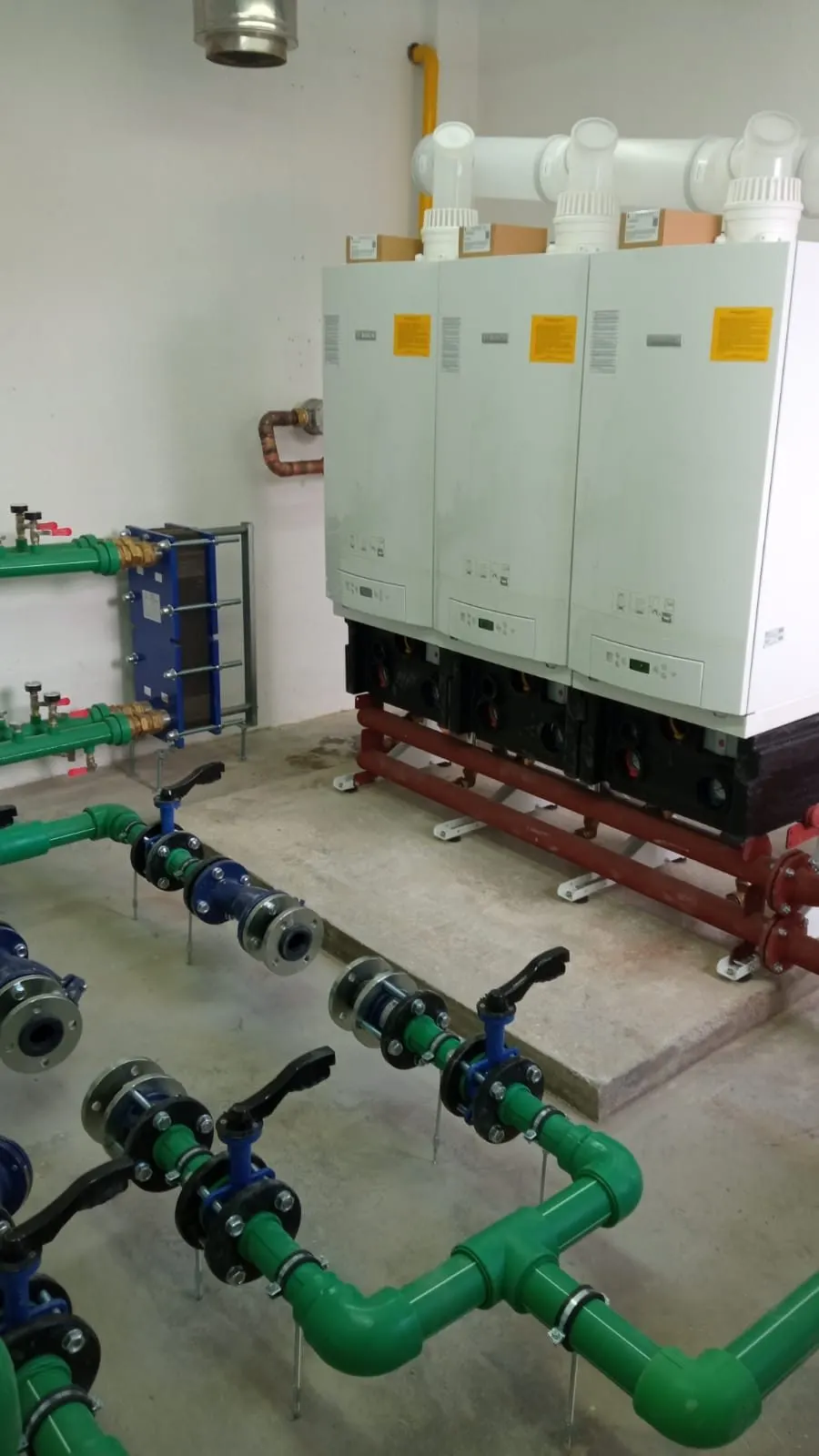
We repair, service, replace and install gas boilers, and we issue the licensed installer’s certificate ourselves where the work requires one.
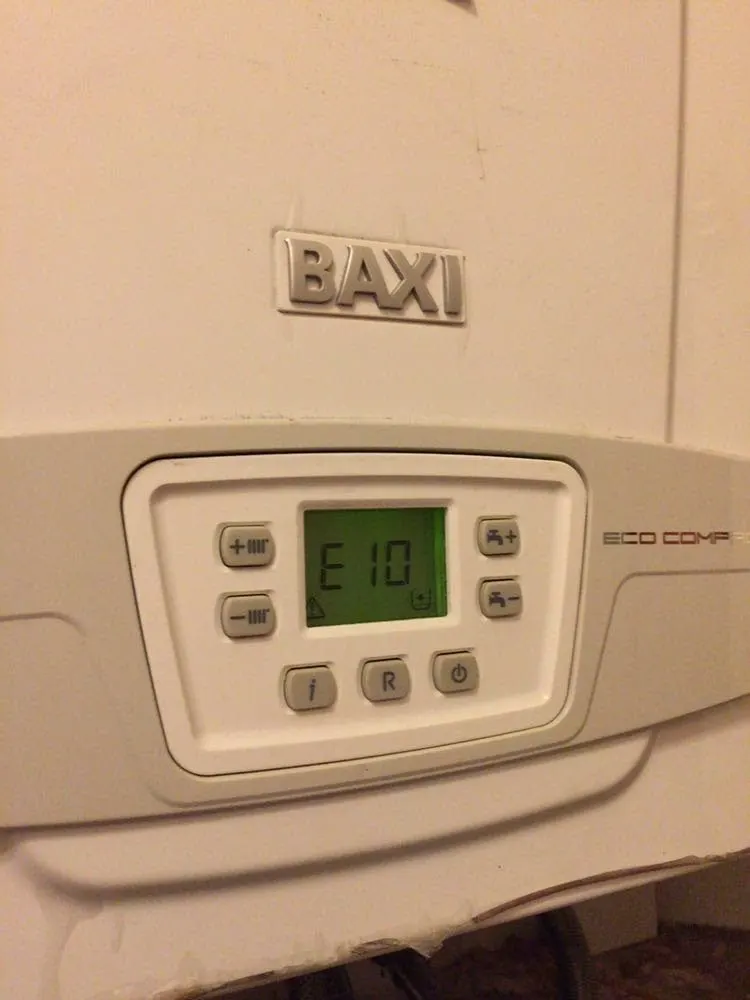
- Repair. No ignition, lockouts, error codes, pressure that drops overnight, noise, a boiler that fires and cuts out. We diagnose the fault and quote it before touching anything.
- Servicing. Once a year, and better before the season than in the middle of it. On many makes it is also what keeps the manufacturer’s warranty alive.
- Replacement. Sized to the property, not to whatever is on the van. A boiler that is too big short-cycles, wears itself out and costs you more to run.
One local detail worth knowing: mains gas does not reach many coastal urbanisations. Plenty of properties run on bottled butane or propane, or on a shared tank. That changes which appliances make sense and how the installation has to be built, so tell us what you have — or send a photograph of the meter or the bottle cupboard and we will tell you.
Gas water heaters
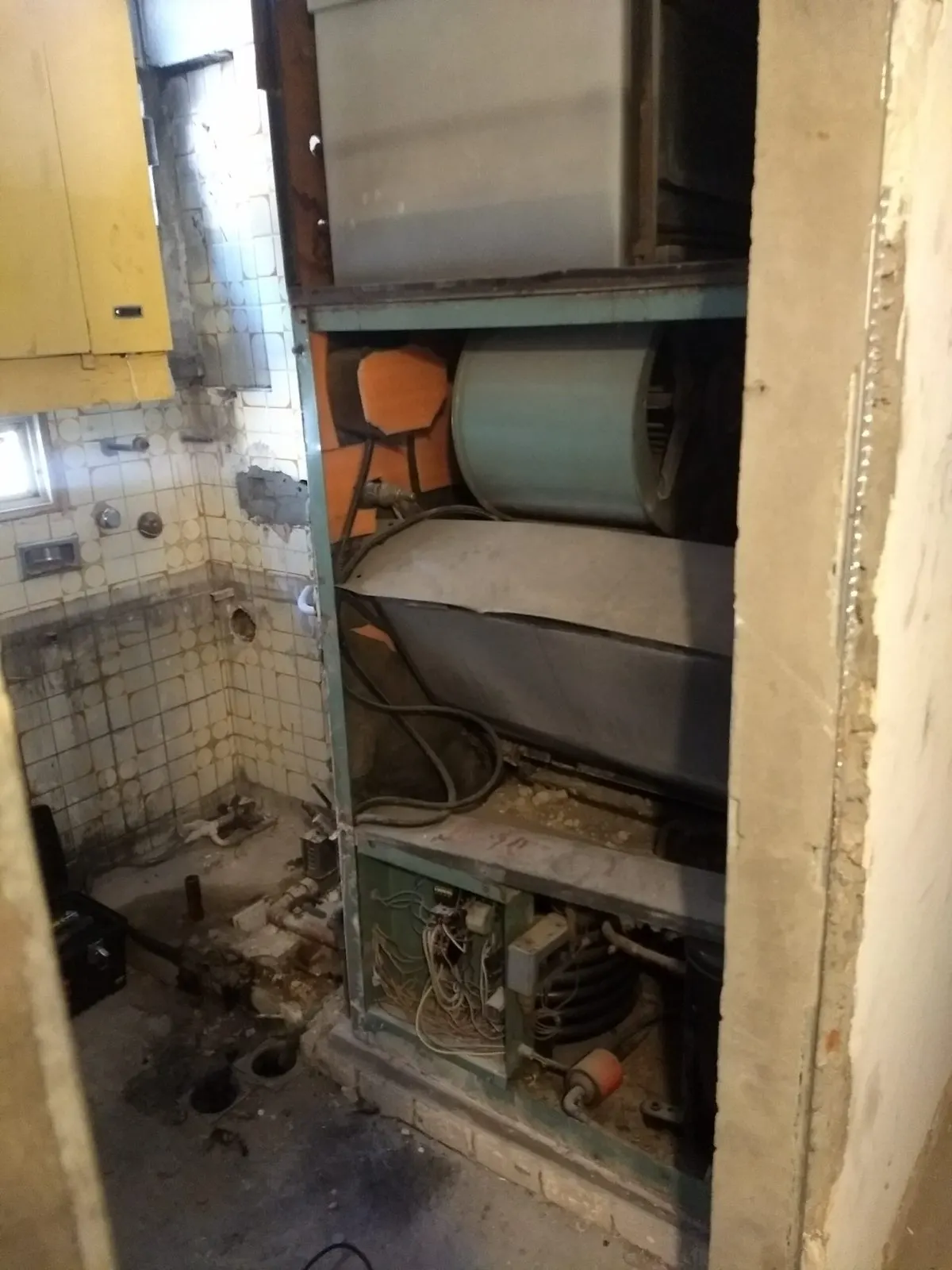
The instantaneous gas heater — the calentador — is what most properties here use for hot water. The classic complaint is water that runs hot, then cold, then hot again, or that never gets hot at a low flow.
Sometimes that is the appliance. Just as often it is incoming water pressure, or a heater that was undersized for two bathrooms in use at once, or a shower mixer that cannot hold a setting. We measure flow and pressure before condemning anything, because replacing the heater when the problem is pressure just gives you the same shower with a new appliance.
Electric water heaters
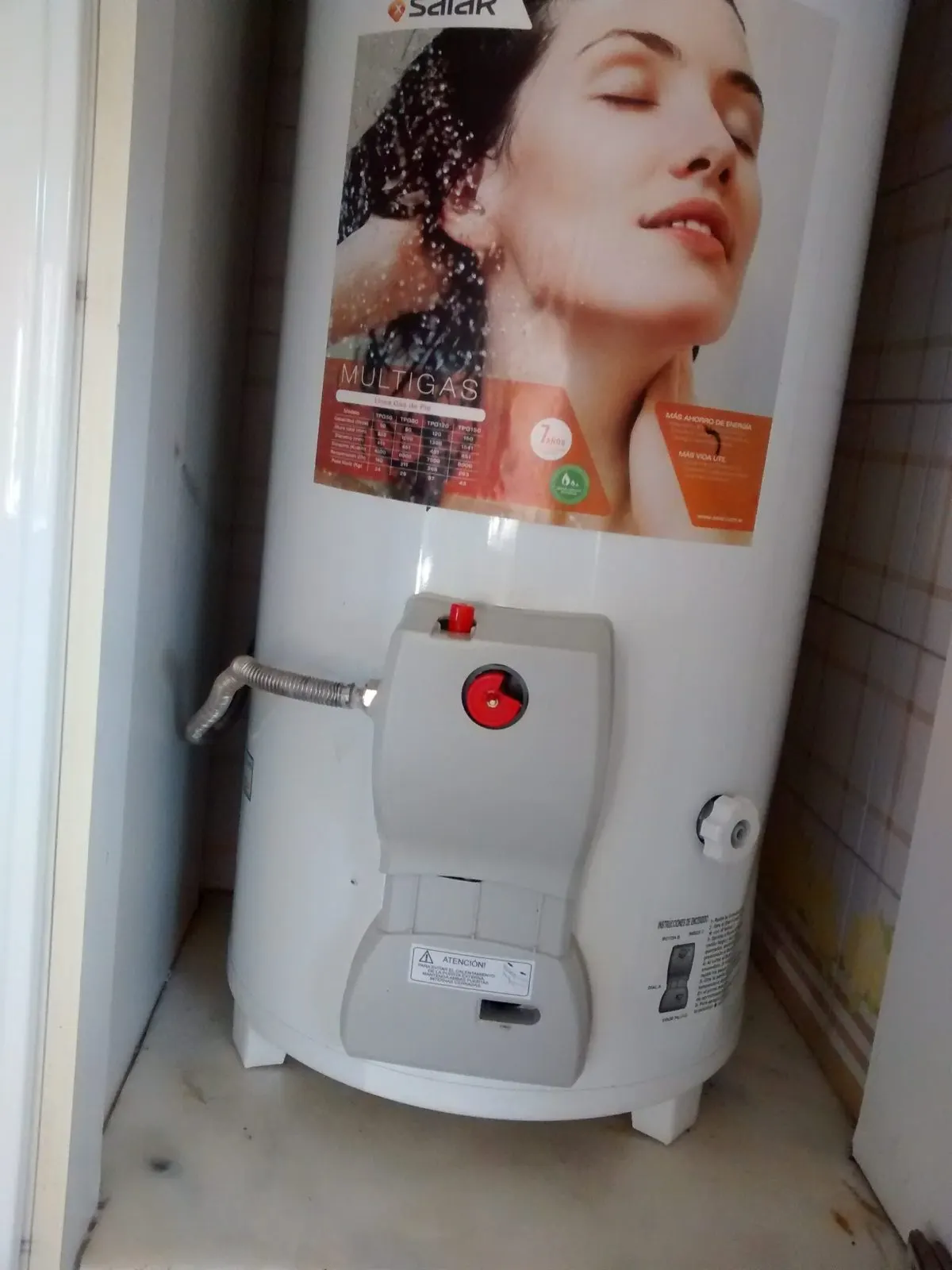
Storage cylinders — termos — are everywhere in apartments. Elements and thermostats are worth repairing without a second thought. A pitted, leaking tank is not: any repair there is a patch that comes back, and we will tell you so rather than sell you one.
If yours has stood unused for months, do not simply switch it on and use it. A cylinder that has sat full of stagnant water at room temperature needs flushing through and heating properly first. It is a five-minute job to do it right, and we include it whenever we open up a property that has been closed.
Radiators and the heating circuit
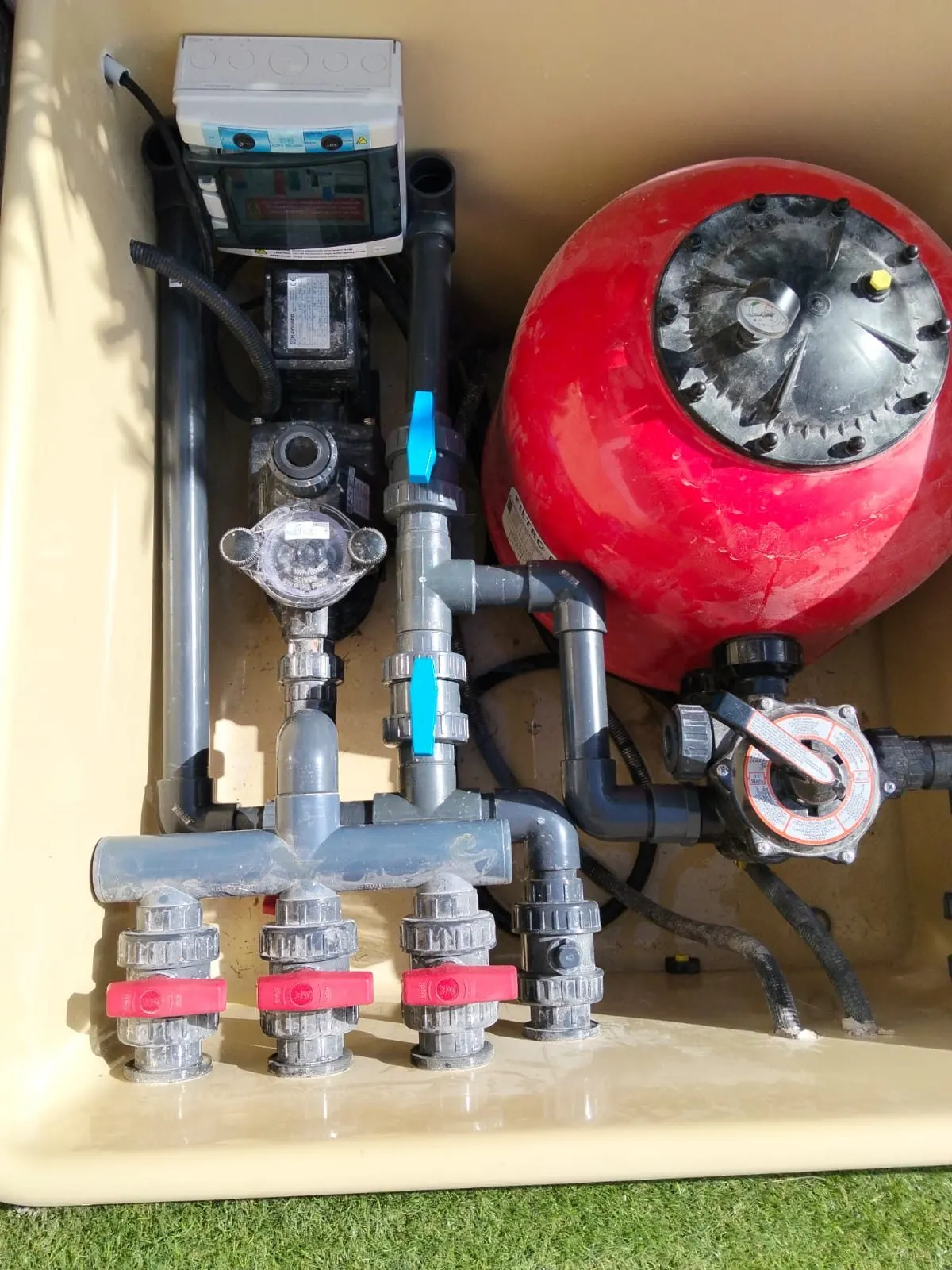
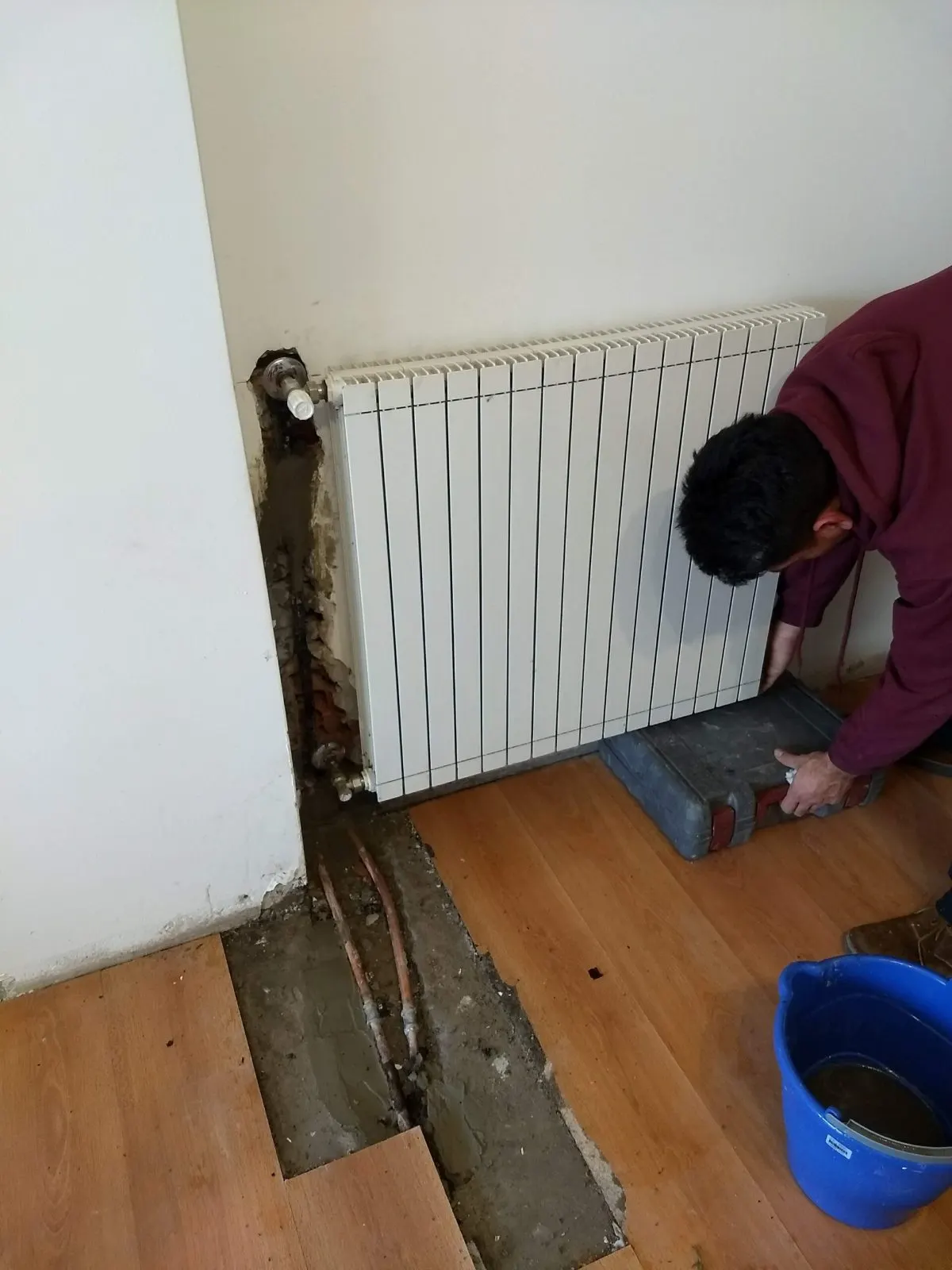
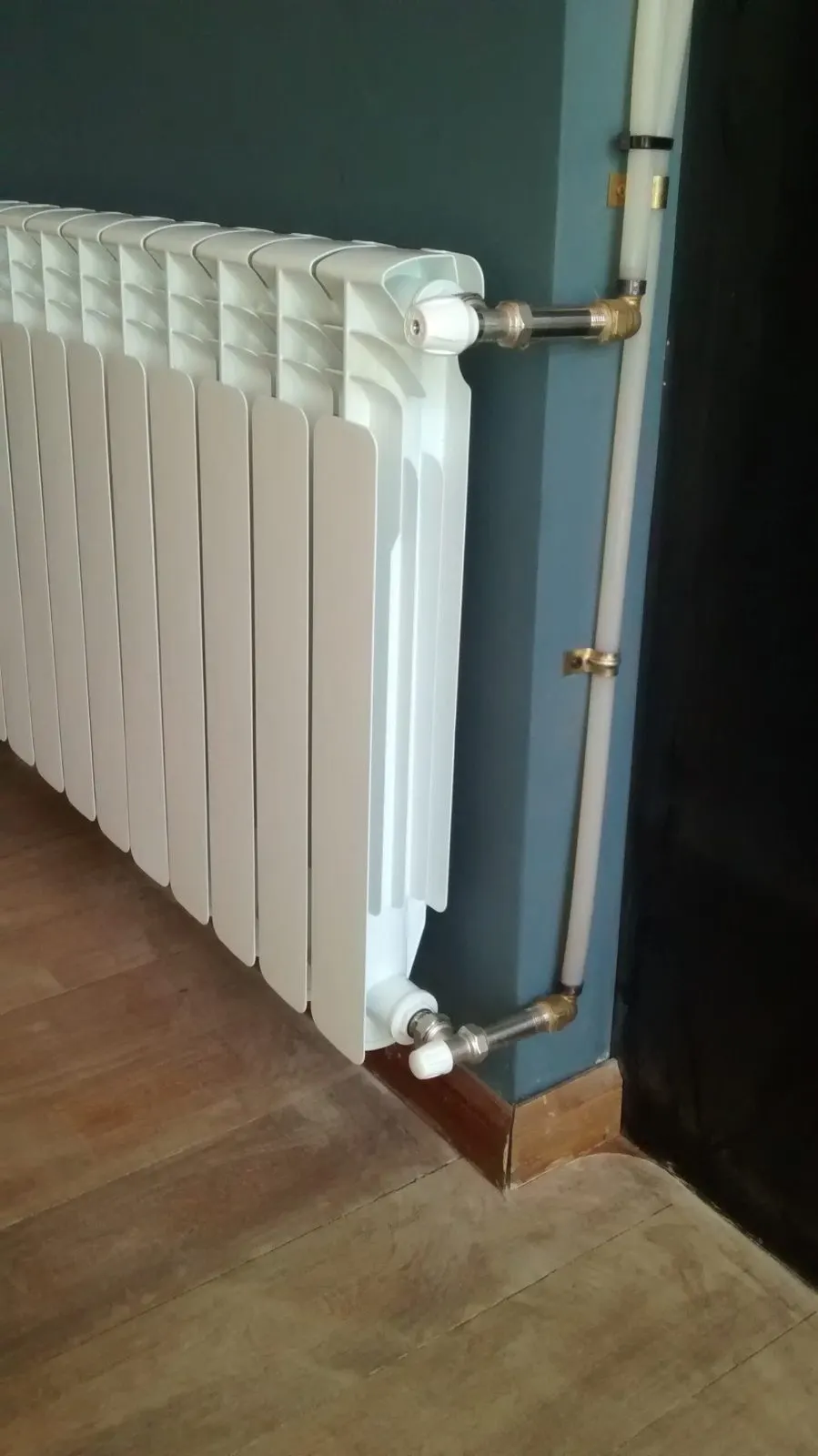
One radiator cold while the rest are hot is almost never a dead radiator. It is usually air in the circuit, a lockshield valve closed years ago, a tired pump, or a system that was never balanced, so the radiators nearest the boiler take all the water.
- Bleeding and pre-season start-up, with the circuit at the right pressure.
- Balancing, so the far bedroom heats like the living room does.
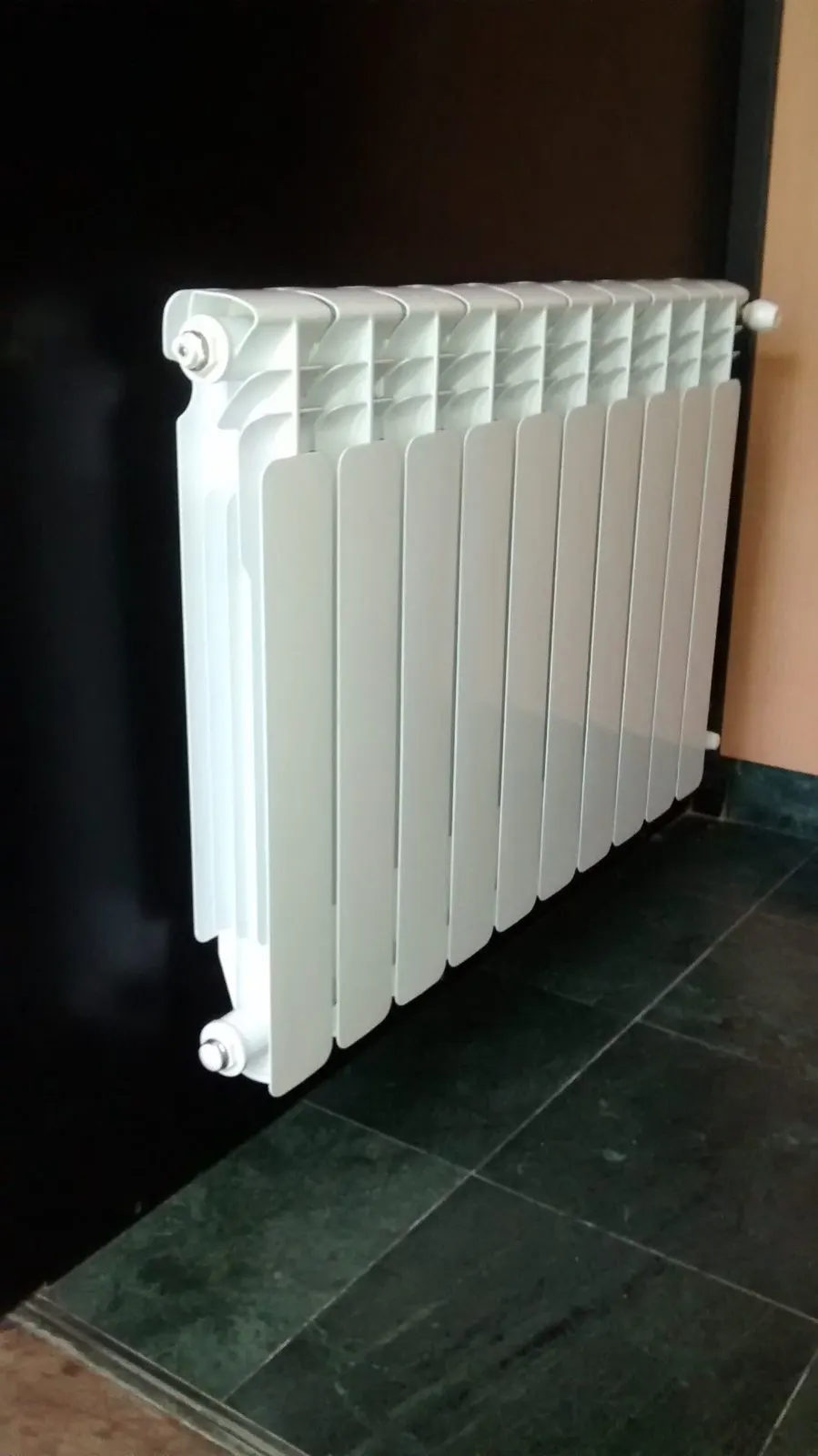
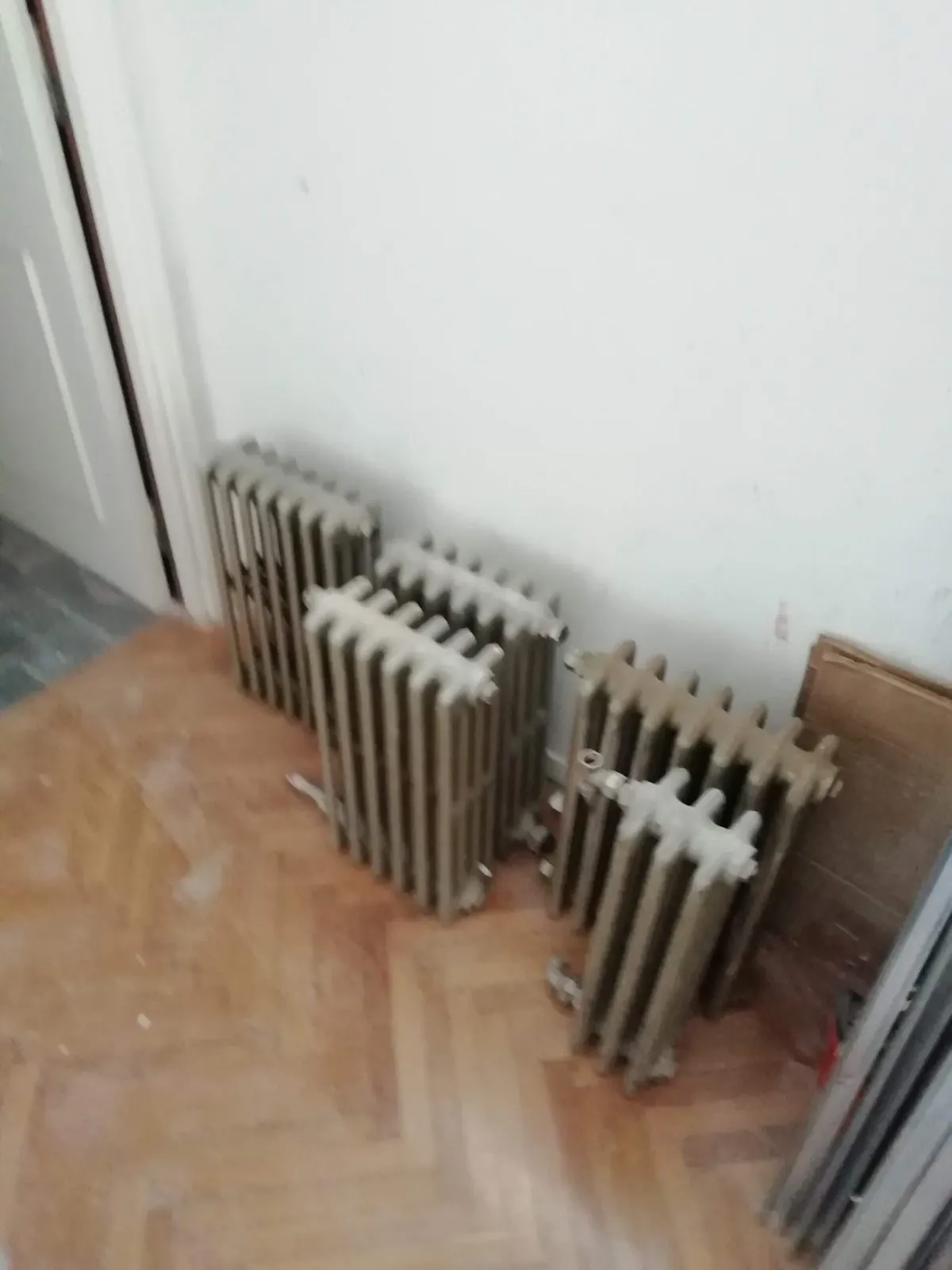
- Replacing radiators — including old cast-iron ones — along with valves and lockshields.
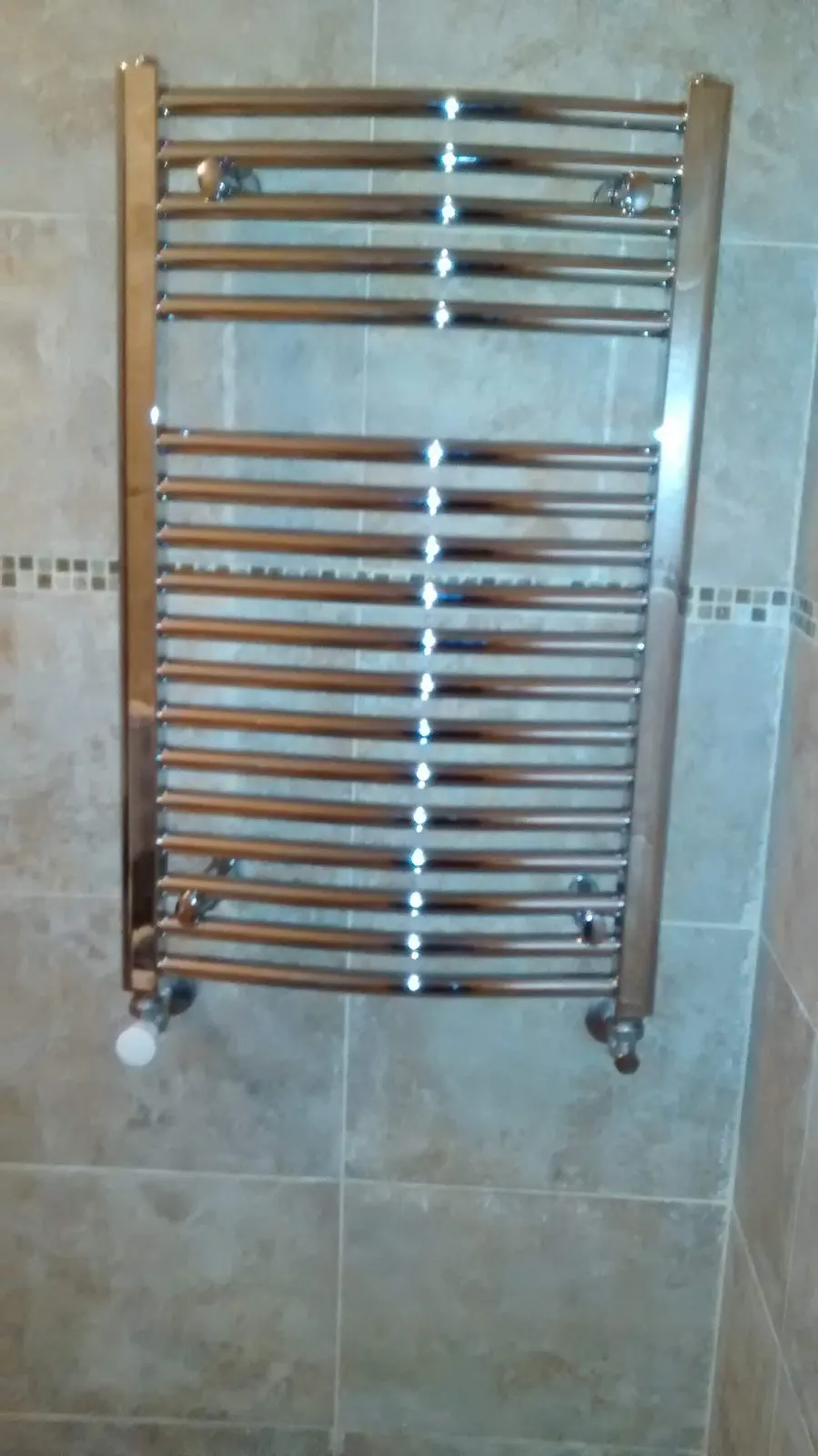
- Heated towel rails in bathrooms, connected to the existing circuit.
- New installations and extensions to rooms that were left without heating.
Underfloor heating
The most comfortable heating there is, and the one most often sold badly. We calculate it, install it, commission it and repair it — and the first thing we do is tell you honestly whether your house is one that will benefit.
Why it feels different
A radiator heats the air in front of it, sends it to the ceiling and returns it cold along the floor. Underfloor heating does the opposite: the whole floor becomes the emitter and the warmth arrives from your feet upwards. That is the temperature curve the body reads as comfortable, which is why most people are content at a degree or two lower on the thermostat than they would be with radiators. On a tiled Spanish floor, the difference is not subtle.
The part that actually matters: it runs on warm water
Radiators need water at 60–80 °C. Underfloor heating warms the same house with water at 30–45 °C, because it emits over square metres instead of over panels. That is where the running cost changes:
- A condensing boiler only truly condenses — and only delivers the efficiency on the brochure — when the water comes back to it cool. Running radiators at 70 °C, it hardly ever does. On an underfloor circuit it condenses all winter.
- An air-source heat pump gets more efficient the lower the water temperature it has to produce. Underfloor heating and a heat pump are, for this climate, the pairing that makes the most sense: mild winters are exactly where a heat pump is at its best.
- It pairs naturally with solar thermal, because a collector reaches those temperatures easily.
How much you actually save depends on your insulation, your windows and how you live in the house, so we are not going to quote you an invented percentage. What we will tell you is where the mechanism is: heating with warm water instead of hot water.
When we advise against it
This is the part nobody mentions before taking the deposit. Underfloor heating has thermal inertia: hours to come up, hours to come down. In a house lived in every day that is a virtue — it holds a steady temperature by itself. In these cases it is a real drawback:
- A holiday home you fly out to. Arrive on a Friday night to a cold house and underfloor heating will not warm it that evening. For a property used a few weeks a year, a fast-response system usually serves you better — or you leave the floor ticking over at a low background temperature and accept that cost.
- A single room used occasionally. For the study used two hours a day, it does not pay.
- An uninsulated house with poor windows. It can be installed, but floor surface temperature is capped for comfort and by regulation, and if the house leaks enough heat the floor may not be able to deliver. In a property like that, your money does more in the glazing first.
- If the finished floor will be thick carpet or covered in large rugs. You would be insulating the emitter from the room.
If your property stands empty for part of the year, this decision deserves a proper conversation — there is more on how we work with absent owners on our page for non-resident property owners.
New build and refurbishment: it comes down to height
In new build there is nothing to discuss: insulation board, pipe and a screed over the top, decided at design stage.
In a refurbishment the question is always how many centimetres you can give up. Low-profile systems exist precisely for this and add very little height. What has to be checked first is the whole picture: the ceiling height you are left with, how the doors end up, how you handle the junction with rooms that are not going to have it, and whether there are steps. That gets measured at your property, not assumed.
And it does not have to be all or nothing. Underfloor heating in the living areas with radiators or towel rails in bedrooms and bathrooms, each group at its own temperature through a mixing valve, is a perfectly normal arrangement and works well.
The floor you lay over it
The floor covering is part of the installation, not just a finish. Porcelain and ceramic tile are the best partners — they barely resist the heat at all, and they are what most houses here already have. Microcement behaves well too. Wood and laminate are possible, but only with products declared suitable for underfloor heating and within the thermal resistance the manufacturer states; not all of them qualify, and getting it wrong shows up as open joints. Tell us what floor you have in mind before we size the system, because it changes the answer.
Cooling in summer: what it does and what it doesn’t
With a heat pump you can circulate cool water through the same pipes and take the edge off. It works, and in a well-insulated house it is welcome. But understand the limit before you get attached to the idea:
- Dew point has to be controlled. If the floor drops below the temperature at which the room air condenses, the floor gets wet. On this coast, in August, that is not a textbook hypothesis — it happens.
- So the control must be automatic, and in many cases paired with dehumidification. It is not a matter of turning the thermostat down.
- Above all: it does not replace air conditioning. It removes a few degrees and improves how the room feels. Anyone telling you otherwise is selling you something.
If you want genuine cooling, combine it with air conditioning and let the floor act as support.
When underfloor heating is already installed and misbehaving
We get called out for this often, and nearly always to the same fear: that the whole floor will have to come up. It rarely does.
- One loop cold, the rest fine. Usually air in the circuit, a seized actuator on the manifold, or a system that was never balanced. Solved at the manifold, without touching the floor.
- Pressure dropping on its own. That one can be a leak. We locate it with a thermal camera and tracer gas — the same equipment we use for leak detection — and open the exact spot, not half the living room.
- Warm but never warm enough, everywhere. Normally the flow temperature or the mixing valve, not the floor.
- Thermostats that control nothing, or zones crossed over after a refurbishment. We identify it loop by loop and label the manifold properly, which in most houses has never been done.
Limescale, which here is part of the problem
The water in this region is hard, and hard water is quietly expensive. It coats heat exchangers and elements, so the appliance burns more to deliver the same hot water and then fails early. If you are replacing a water heater for the second time in a few years, the appliance is not the problem.
We measure the water at your own tap before recommending anything, because it varies sharply from one urbanisation to the next depending on whether it comes from the mains, a desalination plant, a borehole or a shared tank. More on that under plumbing.
How we work
- Licensed installer, in the trade since 1996 . Where the installation requires a certificate, we issue it.
- A fixed written quote before we start. If something appears once it is open that could not have been seen, we stop and the decision is yours.
- The call-out charge is agreed before we set off, never on arrival.
- Monday to Friday 8:00–18:00, Saturday 9:00–14:00. We attend emergencies — see emergencies.
- Everything in English if you prefer: the visit, the diagnosis, the quote and the explanation of what was done. No interpreter, no misunderstandings about what you agreed to.
Frequently asked questions
Can underfloor heating go into a house that is already built?
Yes, using low-profile systems designed for refurbishment, laid over the existing floor. What decides whether it is viable is not the system but the centimetres of height you can give up and how the doors and thresholds end up. We measure before promising anything.
I think I have a leak in my underfloor heating. Does the whole floor come up?
Almost never. We locate it with a thermal camera and tracer gas and open only the exact point. Before assuming a leak, we rule out the common causes — air in a loop, a seized actuator, an unbalanced system — all of which are fixed at the manifold.
Is underfloor heating worth it for a holiday home?
Usually not, and we will say so. It takes hours to warm a house, which is ideal for a home lived in daily and wrong for one you arrive at on a Friday night. For an intermittently used property there are better answers, and we would rather recommend one than sell you the wrong system.
My boiler is showing an error code. Can you tell me what it is over the phone?
We can tell you which family of fault it usually points to and whether it is safe to keep using — which is not nothing. What we will not do is price the repair from the code, because the same number comes from causes that cost very different amounts.
How often should a gas boiler be serviced?
Once a year, and better before the season than during it. As well as avoiding the breakdown, it is what keeps the warranty alive on makes that require periodic servicing.
The water runs cold halfway through a shower. Is it the water heater?
Usually, but not always the appliance itself. It can be low incoming pressure, or a heater undersized for the way the house is used. We measure flow and pressure before changing anything.
Where we work
The Costa Blanca north and south, the Mar Menor and Cartagena, Mazarrón, Águilas, inland Murcia and the Almería Levante around Mojácar and Vera. Town by town on service areas.
Tell us what the house has now, what it does in winter and what you would like it to do. We will tell you what is worth doing — including when the answer is to spend the money somewhere else.