Home Water leak detection Hidden water leak guide
Before anyone comes to your property there are four checks you can do yourself in under an hour. They tell you whether you have a leak and, very often, roughly where it is.
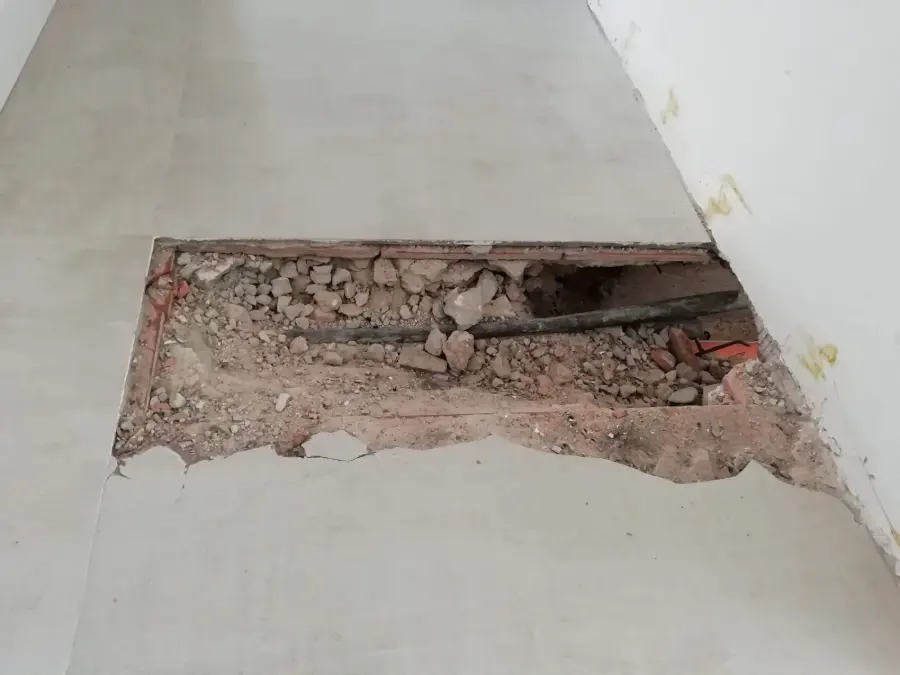
A hidden water leak is paid for twice: first on the water bill, for as long as nobody finds it, and then in building work if someone decides to look for it by breaking up floors. These checks need no tools. They are the same ones we would do first when we arrive, and doing them yourself means that when you call you can describe exactly what you see.
In this guide:
- Why is my water bill so high?
- Check 1: the meter with everything switched off
- Check 2: isolate by zones
- Check 3: hot or cold?
- Check 4: the bucket test for pools
- Signs that need no test
- When to call a specialist
Why is my water bill so high?
A bigger household, guests, irrigation or filling a pool can all raise the bill, and none of those is a leak. What points to one is a bill that climbs while the way you use water has not changed. The way to settle it is not to argue with the bill but to read the meter yourself, which is what the first check does. If you have a pool or irrigation, switch those off for the test.
Check 1: the meter with everything switched off
This is the definitive test, and the easiest. In a house the meter is usually near the property boundary; in an apartment building the meters are often grouped in a communal meter room, but the principle is the same.
- Close every tap in the property.
- Switch off the washing machine, the dishwasher, the automatic irrigation and any pool filling.
- Go to the meter and note the reading, or watch the small dial.
- Wait half an hour without using any water, then look again.
If it has moved, there is a leak. If it has not moved, there is no leak on the water supply, which does not rule out a drain or water coming through a facade, because they give similar symptoms. For a very small leak, note the reading at night and read it again in the morning before anyone uses water.
Check 2: isolate by zones to narrow it down
If the meter moves, the next step is to find out where. Close the main stop valve of the property, leaving the meter open.
- The meter keeps turning: the leak is between the meter and your house, on the buried supply pipe.
- The meter stops: the leak is inside. Close the valves zone by zone (bathroom, kitchen, terrace, irrigation) and check the meter after each one. The zone where it stops is the zone with the leak.
Done calmly, this alone can save half the time it takes to locate the leak.
Check 3: hot or cold?
A clue almost nobody mentions, and one that changes the equipment we need to bring. Close the valve feeding the water heater or the boiler. If the meter stops, the leak is on the hot water circuit. If it keeps turning, it is on the cold one. Hot water leaks are located much better with a thermal camera, because they leave a heat signature under the floor.
Check 4: the bucket test, for swimming pools
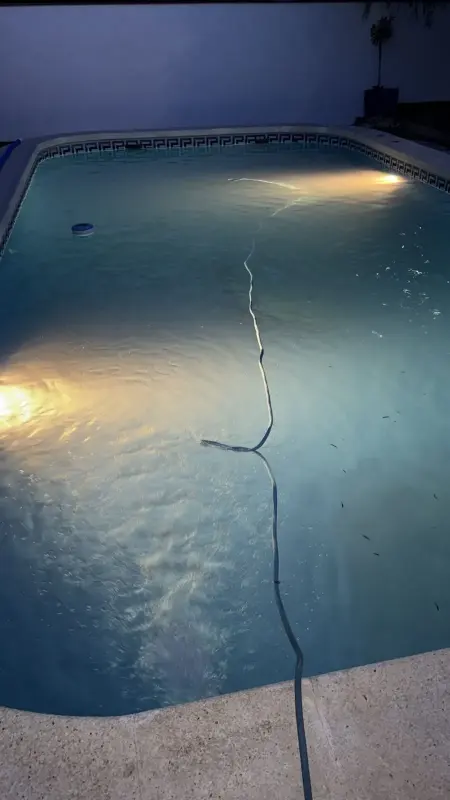
If what is dropping is the level of your pool, evaporation and a leak look the same at first. The bucket test tells them apart.
- Fill a bucket with pool water and stand it on a step, half submerged.
- Mark the water level inside the bucket and the pool level outside it.
- Wait 48 hours with the pump on its normal cycle.
- Compare. If the pool has dropped more than the bucket, there is a leak. If both have dropped the same, it is evaporation.
In a Spanish summer evaporation is considerable and often frightens people for no reason. If you do have a leak in the pool or its pipework, see our page on swimming pool services.
Signs that need no test
- A damp patch that grows slowly and comes back however often it is painted.
- A patch of floor that is warm for no reason: a hot water leak.
- The sound of running water at night with everything closed.
- A general loss of water pressure in the property.
- A water bill that rises when your use of water has not changed.
What not to do
- Do not break in where you see the damp. Water travels, and the stain appears where it finds a way out, which can be metres from the break.
- Do not drill to “check”. With underfloor heating, a badly placed drill creates a second leak on top of the first.
- Do not leave it running. A small leak does not cure itself, and the bill keeps adding up.
If you own a second home
A leak in a property that is empty can run for weeks before anyone notices. If you are away for long periods, a meter check on arrival and before you leave is worth the five minutes. Our guides to closing up your coastal property and for non-resident property owners cover what to do before you leave and what we can look after while you are away.
When to call a specialist
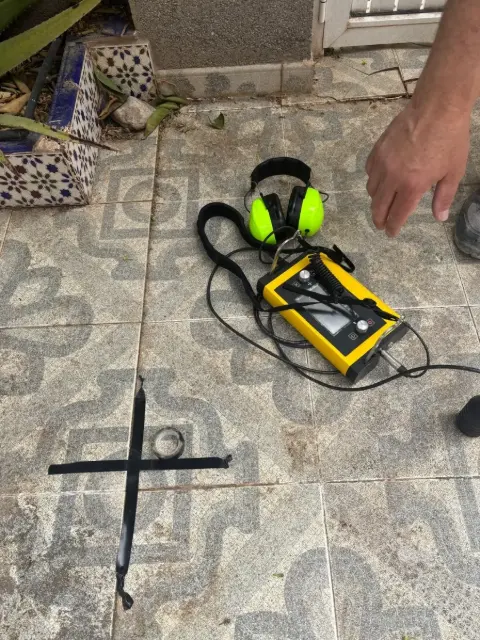
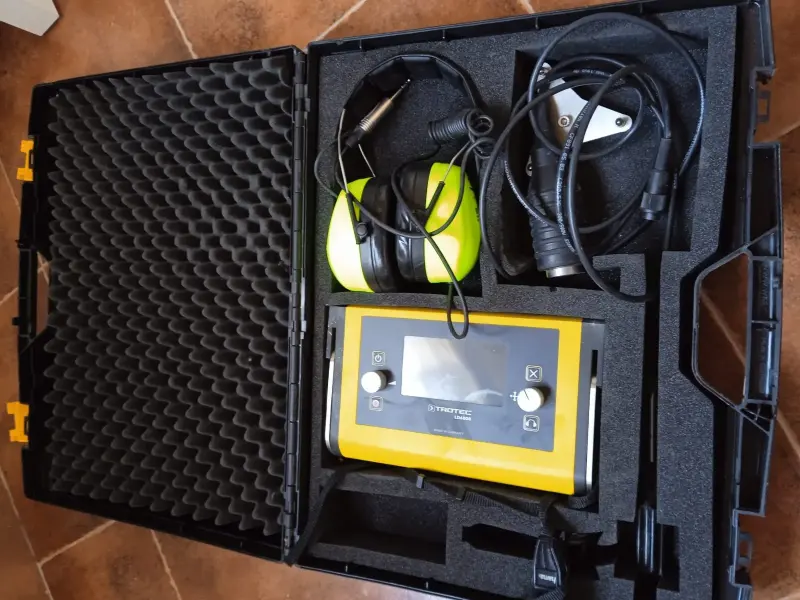
If the meter turns with everything closed and you have narrowed down the zone, that is the moment. You will arrive at the conversation with specific information, and locating the leak will be faster and cheaper. What comes next (ground microphone, correlator, thermal camera or tracer gas) does need equipment. We explain how it works on our water leak detection page. If water is actively escaping, see our emergencies page; for repairs once the leak is found, our plumbing services.
We work in the Region of Murcia and the province of Alicante, from a base in Totana. We speak English for the essentials (describing the fault, the quote and the work done) and put the technical detail in writing. More questions? See our general FAQ.
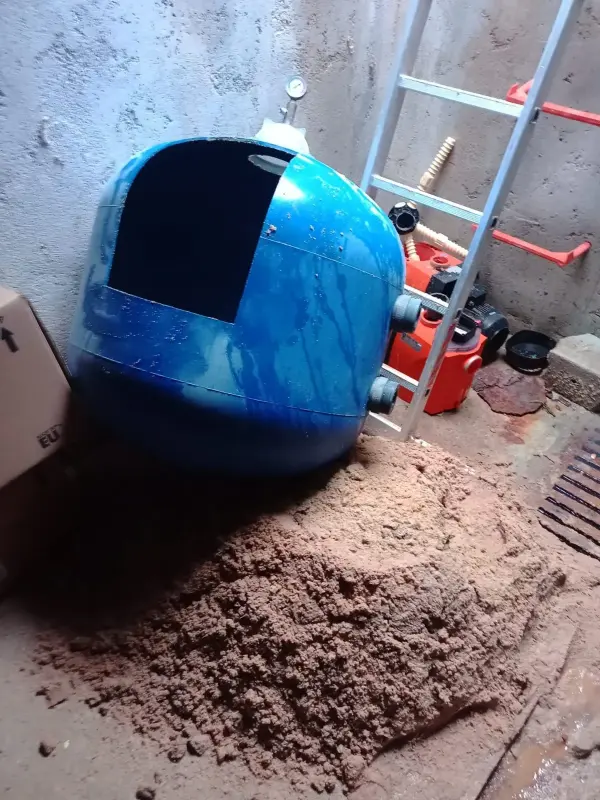
Is your meter turning with everything closed? Tell us what you see and we will tell you what to check before anyone visits.
Frequently asked questions
How can I tell if I have a hidden water leak?
Close every tap and switch off every appliance, including the washing machine, dishwasher, irrigation and pool filling, then watch your water meter. If it moves, water is going somewhere. A meter that does not move rules out a leak on the water supply, but not a drain leak or water coming in through a wall.
Is a high water bill always a leak?
No. A bigger household, guests, irrigation or filling a pool can all push the bill up. What points to a leak is a bill that rises with no change in how you use water, or a meter that turns when everything is closed.
The meter stopped when I closed everything. Does that mean I am fine?
It means there is no leak on the pressurised water supply. A damp patch can still come from a drain, from condensation or from water getting in through a facade or roof, which give similar symptoms.
The meter only moves very slowly. Is it still a leak?
It can be. A small leak moves the dial slowly, so half an hour may not show it. Note the reading last thing at night with everything closed and read it again in the morning, before anyone uses water. Any change over that time is water going somewhere.
How do I know whether the leak is on the hot or the cold pipe?
Close the valve feeding your water heater or boiler. If the meter stops, the leak is on the hot water circuit. If it keeps turning, it is on the cold. Hot leaks show up much better with a thermal camera, so knowing this in advance saves a visit.
Is my pool leaking or is it just evaporation?
Use the bucket test. Stand a bucket of pool water on a step, half submerged, and mark the water level inside and outside it. After 48 hours with the pump on its normal cycle, if the pool has dropped more than the bucket, there is a leak. If both dropped the same, it is evaporation, which in a Spanish summer can be a lot and looks alarming for no reason.
The damp is on one wall. Should I break the plaster there?
No. Water travels: the stain appears where it finds a way out, which can be metres from where the pipe has broken. Breaking in at the stain often opens the wrong place. It is cheaper to locate the leak first.
Can a leak be found without breaking up the floor?
Usually, yes. With a ground microphone, a correlator, a thermal camera or tracer gas, the leak can be located to within a small area, so only that point is opened. We explain the methods on our water leak detection page.